


Jun 01, 2026
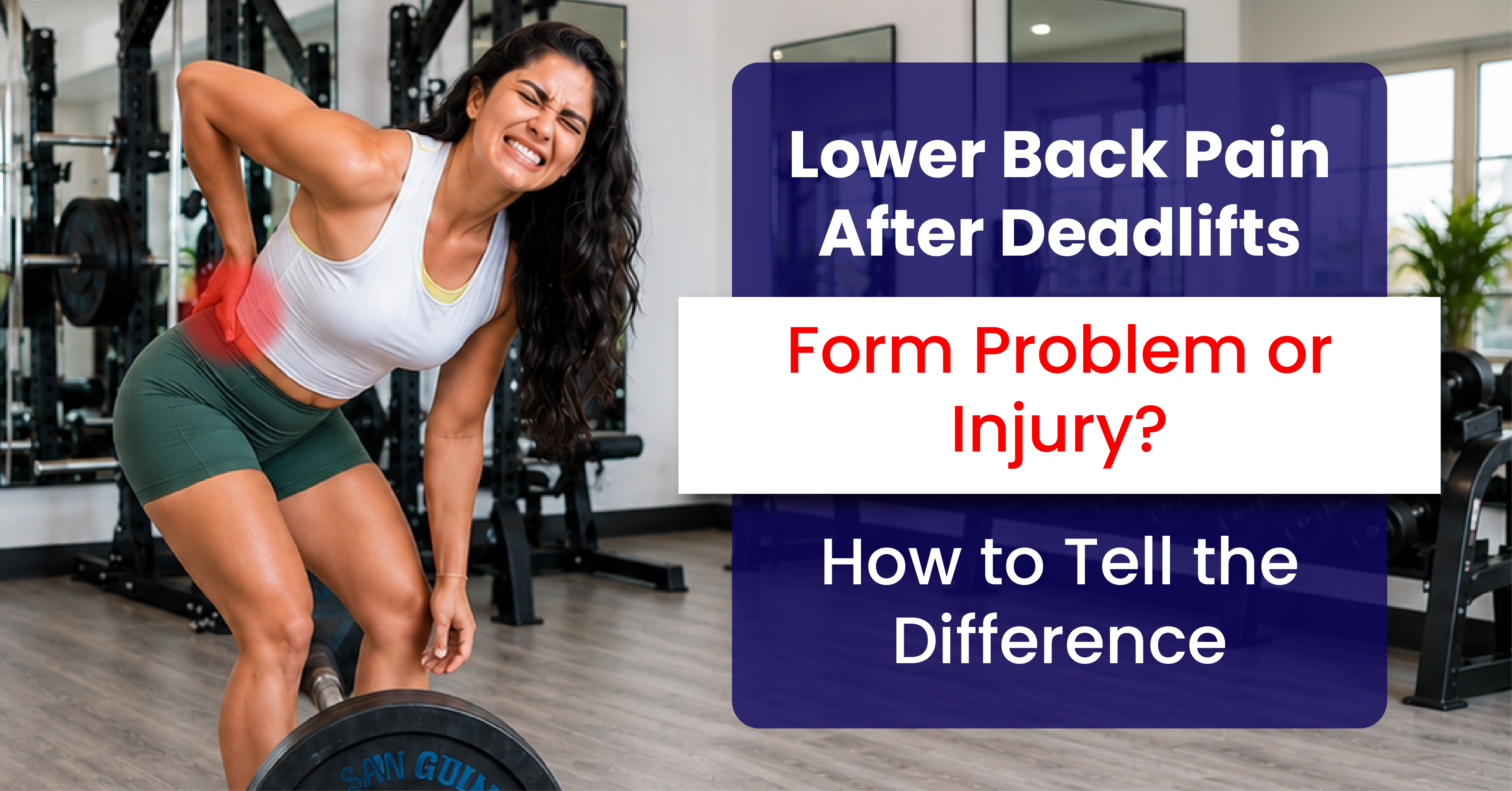
Deadlifts are often called the king of all exercises-and for good reason. They build full-body strength, improve posture, and train some of the most important muscle groups in the body.
But for many people, especially those who are new to strength training, deadlifts come with an unwelcome side effect: lower back pain.
That discomfort can create confusion. Is it just normal soreness from a good workout? Or is it a warning sign that something went wrong?
The truth is, not all back pain is created equal. Some of it is harmless and temporary, while other types can signal improper technique or even injury. Understanding the difference is essential-not just for performance, but for long-term health and safety.
To understand why pain happens, it helps to first understand what the lower back is doing during a deadlift.
Although deadlifts are meant to target the glutes and hamstrings, the lower back plays a crucial supporting role. It acts as a stabilizer, keeping the spine neutral and steady while the rest of the body generates force to lift the weight.
When everything is aligned correctly, the load is distributed efficiently across the hips and legs. But if that alignment is compromised-even slightly-the lower back begins to take on more stress than it should. Over time, or under heavy load, that extra strain can lead to discomfort or injury.
After a challenging workout, it's completely normal to feel sore. This is known as delayed onset muscle soreness (DOMS), and it's part of the muscle adaptation process.
This type of soreness usually develops gradually, often the day after your workout. It feels like a dull, tight ache and tends to improve as you move around or as days pass. Importantly, it doesn't restrict your movement in a significant way.
Pain, however, tells a different story. If the sensation is sharp, sudden, or appears during the lift itself, it's worth paying closer attention.
Pain that lingers, worsens, or affects your ability to bend, stand, or walk is not something to ignore.
Learning to distinguish between these two sensations is one of the most valuable skills any lifter can develop.
In most cases, lower back discomfort after deadlifts can be traced back to one thing-form.
Deadlifts are a technical movement. Small errors can significantly change how force is distributed throughout the body.
For example, rounding the lower back during the lift shifts the load directly onto the spine instead of the hips. Similarly, letting the bar drift too far away from the body increases leverage on the lower back, making the lift more stressful than it needs to be.
Another common mistake is failing to engage the core. Without proper core stability, the spine loses its support system, forcing the lower back muscles to compensate.
What makes form-related pain different is that it tends to be manageable. It may feel uncomfortable, but it usually improves with rest and proper correction. Once technique is adjusted, the discomfort often disappears entirely.
While form issues are common, there are times when back pain signals something more serious.
If you experience a sharp or stabbing sensation during the lift, that's often an immediate red flag.
Pain that doesn't improve after a few days, or that interferes with basic movements like sitting or walking, may indicate a strain or deeper injury.
In some cases, the pain may radiate down the legs or be accompanied by tingling or numbness. This could suggest nerve involvement, which requires prompt attention.
Unlike soreness, injury-related pain doesn't fade easily. It demands rest, and in some cases, medical evaluation. Ignoring these signs and continuing to train can make the problem worse.
Beyond form, another major contributor to back pain is lifting more weight than the body is ready for.
It's easy to fall into the trap of increasing weight too quickly, especially in a gym environment where progress is often measured in numbers.
But strength doesn't just come from lifting heavy-it comes from lifting correctly.
When the weight exceeds your current capability, your body instinctively looks for shortcuts. That often means compromised form, reduced control, and increased stress on the lower back.
Progression should always be gradual. Mastering technique with lighter weights builds a stronger foundation and significantly reduces the risk of injury.
Preventing lower back pain isn't about avoiding deadlifts-it's about doing them right.
A strong, neutral spine is the foundation of every safe lift. This means maintaining the natural curve of your back without rounding or overextending.
Engaging your core before lifting creates stability and protects the spine throughout the movement.
The bar should stay close to your body, and the movement should be driven by your hips-not your back. Think of pushing the floor away rather than pulling the weight up.
Equally important is preparation. A proper warm-up activates the muscles involved in the lift and reduces the risk of strain.
Taking a few extra minutes to prepare can prevent weeks of discomfort.
If you do experience lower back pain after deadlifts, the first step is to pause and evaluate.
For mild soreness, active recovery-such as light movement and stretching- can help speed up the healing process. Avoid jumping back into heavy lifting too soon.
If the pain feels more serious, rest becomes essential. Applying heat or cold therapy may provide relief, but the priority should be avoiding further strain.
Once the pain subsides, returning to deadlifts should be done cautiously. Focus on technique, reduce the weight, and rebuild gradually.
Lower back pain after deadlifts is a common experience, but it doesn't have to be a recurring problem.
In many cases, it's simply a sign that something in your form needs adjustment. In others, it may be your body asking for rest and recovery.
The key is learning to listen-and respond appropriately.
Deadlifts are one of the most rewarding exercises you can do, but they demand respect.
When performed with proper technique, patience, and awareness, they build strength without compromising your body.
The goal isn't just to lift heavier-it's to lift smarter.
If the discomfort feels like a dull ache that appears later and improves within a few days, it's usually muscle soreness or a minor form issue.
However, sharp, immediate, or persistent pain-especially if it limits movement or radiates- may indicate an injury and should be taken seriously.
Yes, mild soreness can occur, especially if your lower back muscles are not used to the load. It should gradually improve and not feel sharp or severe.
If the pain is mild soreness, you can continue with lighter weights and corrected form. If it's sharp or persistent, it's best to stop and allow recovery.
Focus on maintaining a neutral spine, engaging your core, keeping the bar close, and progressing weight gradually.
If the pain lasts more than a few days, worsens, or includes symptoms like numbness or radiating pain, it's advisable to consult a healthcare professional.

‘Sign up’ for our newsletter to unlock exclusive updates, special offers, and wellness tips. Be the first to discover new products and promotions. Join us on the path to an active and pain-free lifestyle !