


Jun 08, 2026
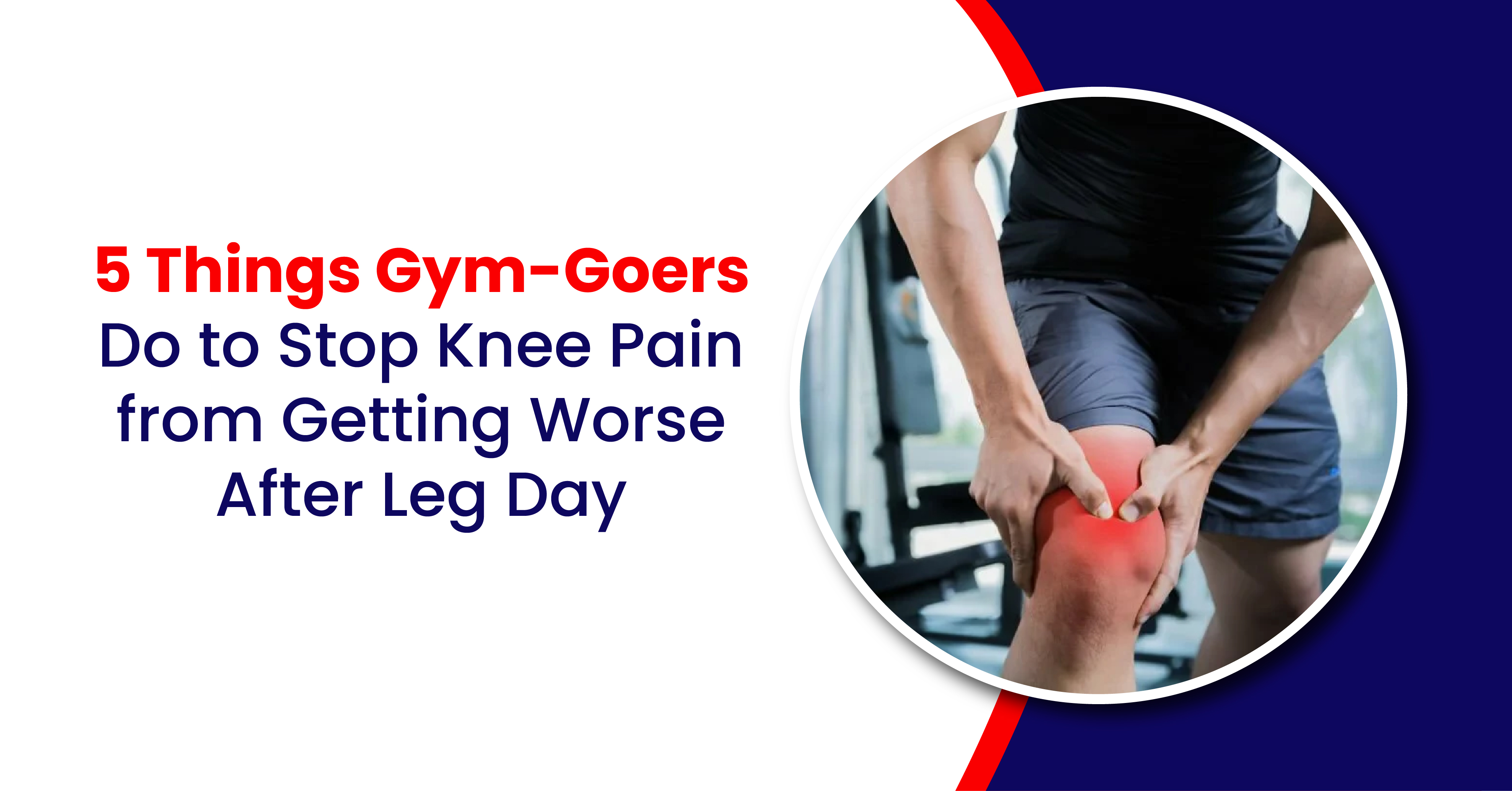
Leg day is often seen as the toughest-and most rewarding-part of any fitness routine.
Exercises like squats, lunges, and leg presses build strength, improve mobility, and enhance overall performance.
But for many gym-goers, the day after leg day brings an uncomfortable reality: knee pain.
At first, it might feel like a minor issue-just a bit of soreness or stiffness.
But if ignored, that discomfort can gradually turn into something more serious, affecting not just workouts but daily movement as well.
The good news is that experienced lifters don't simply push through knee pain.
They adjust, recover, and train smarter.
Here are five key things gym-goers do to prevent knee pain from getting worse after leg day.
One of the biggest mistakes beginners make is brushing off knee pain as “normal.”
While muscle soreness is expected after a tough workout, joint pain is different.
Experienced gym-goers learn to listen to their bodies.
They pay attention to when the pain occurs-whether it's during movement, after exercise, or while resting.
This awareness helps them identify whether the issue is related to overuse, poor form, or excessive load.
Instead of pushing through discomfort blindly, they take a step back and assess the situation.
This early response often prevents minor issues from turning into long-term injuries.
Knee pain after leg day is often linked to improper exercise technique.
Movements like squats and lunges place significant stress on the knees, and even small errors in form can shift that stress in the wrong direction.
For example, letting the knees collapse inward during a squat or pushing them too far forward can increase joint strain.
Similarly, uneven weight distribution or lack of control during movement can put unnecessary pressure on the knees.
Seasoned lifters prioritize form over weight.
They focus on controlled movements, proper alignment, and engaging the right muscle groups-especially the glutes and hamstrings-to support the knees.
By correcting technique, they reduce strain at the source rather than just treating the symptoms.
Many people focus heavily on workouts but overlook recovery, which is where real progress happens.
After leg day, experienced gym-goers make recovery a priority.
This includes adequate rest, proper sleep, and active recovery methods such as light walking or stretching.
These activities improve blood flow, reduce stiffness, and help the body repair itself.
Some also use supportive methods like applying cold or heat therapy, depending on the type of discomfort.
Gentle massage or topical applications may also help relieve tension around the knee joint.
The goal is simple: allow the body to recover fully before putting it under stress again.
Strong knees are not just about the joint itself-they depend on the muscles surrounding it.
Gym-goers who manage knee pain effectively focus on strengthening key supporting muscles, including the quadriceps, hamstrings, and glutes.
These muscles help stabilize the knee and distribute load more evenly during movement.
Exercises like leg curls, glute bridges, and controlled step-ups are often included to build this support system.
Over time, stronger muscles reduce the strain placed directly on the knee joint.
This approach doesn't just relieve pain-it prevents it from returning.
When knee pain appears, the instinct might be to stop training altogether.
However, experienced lifters know that complete inactivity can sometimes make things worse.
Instead of quitting, they modify their workouts.
This might mean reducing weight, limiting range of motion, or temporarily avoiding exercises that aggravate the knee.
For example, switching from heavy squats to lighter variations or focusing on low-impact exercises can keep the body active without adding stress to the joint.
This balanced approach allows for recovery while maintaining consistency in training.
Knee pain after leg day is not uncommon, but it shouldn't be accepted as a normal part of training.
The difference between short-term discomfort and long-term injury often comes down to how you respond.
Gym-goers who stay consistent over the years are not the ones who push through pain-they are the ones who adapt, learn, and train intelligently.
They understand that progress is not just about lifting heavier weights, but about building a body that can handle those weights safely.
Your knees play a vital role in almost every lower-body movement, both inside and outside the gym.
Taking care of them is essential for maintaining an active and pain-free lifestyle.
By understanding pain, improving form, prioritizing recovery, strengthening supporting muscles, and adjusting workouts when needed, you can prevent knee discomfort from becoming a serious problem.
Leg day should make you stronger-not hold you back.
With the right approach, you can continue to train confidently while keeping your knees healthy for the long run.
Mild muscle soreness is normal, but joint pain in the knee should not be ignored as it may indicate strain or improper form.
Not necessarily.
It's better to modify your workouts and avoid movements that cause pain rather than stopping completely.
Common causes include poor form, weak supporting muscles, overloading, and lack of proper warm-up.
Focus on strengthening surrounding muscles like quadriceps, hamstrings, and glutes through controlled exercises.
If the pain is persistent, severe, or affects daily movement, it's best to consult a healthcare professional.

‘Sign up’ for our newsletter to unlock exclusive updates, special offers, and wellness tips. Be the first to discover new products and promotions. Join us on the path to an active and pain-free lifestyle !